Headend IPTV: A Complete Guide to IPTV Headend Systems
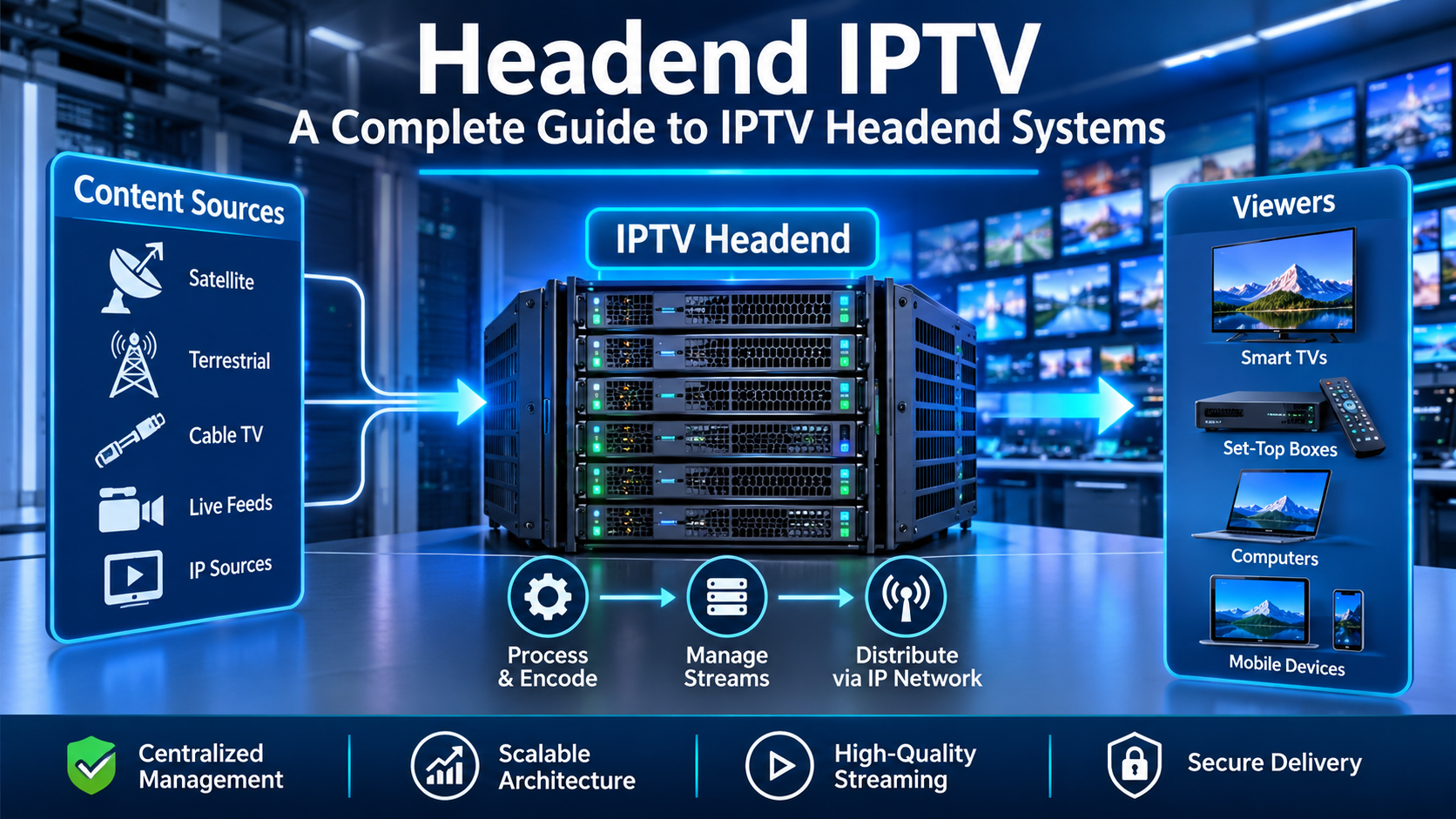
Headend IPTV is the central system that receives, processes, manages, and distributes television content over an IP network. It acts as the operational hub of an IPTV platform, converting content from multiple sources into organized streams that can be delivered to authorized viewers on compatible devices.
Whether you are building an IPTV service, managing a hotel television system, or designing an enterprise video network, understanding how a headend IPTV system works is essential. The right infrastructure can improve stream quality, simplify content management, and create a more reliable viewing experience.
What Is a Headend IPTV System?
A headend IPTV system is the technical infrastructure responsible for collecting television and video content from different authorized sources and preparing it for distribution through an Internet Protocol network.
In simple terms, the headend is where content enters the IPTV ecosystem and begins its journey to the viewer.
A typical IPTV headend may receive content from:
- Satellite signals
- Cable television feeds
- Terrestrial broadcasts
- Live video encoders
- IP video sources
- Video-on-demand servers
The system then processes these signals and distributes them across a private IP network or through authorized internet-based delivery systems.
A Simple IPTV Headend Definition
An IPTV headend is a centralized platform that receives video content, processes and packages it into IP streams, and distributes those streams to authorized viewers over an IP network.
This definition highlights the three primary functions of a headend IPTV solution:
- Content acquisition
- Content processing
- Content distribution
[Link to related article about how IPTV works]
How Does a Headend IPTV Work?
Understanding the workflow of a headend IPTV system makes it easier to see why this technology is important. Although configurations vary, most IPTV headend architectures follow a similar process.
Step 1: Content Acquisition
The first stage involves receiving content from authorized sources. For example, a system may receive television channels through satellite receivers, terrestrial antennas, professional content feeds, or IP connections.
The incoming signals can use different formats and standards. This means the headend IPTV infrastructure must be able to manage multiple input types.
Step 2: Signal Processing
Once the content enters the system, it may need to be processed before distribution.
Depending on the source and destination, this can include:
- Decoding incoming signals
- Encoding video into an appropriate format
- Transcoding content for different bandwidth requirements
- Multiplexing multiple streams
- Adding service information and metadata
The goal is to prepare content for efficient and reliable IP delivery.
Step 3: Stream Management
The IPTV headend organizes available streams and determines how they are distributed across the network.
Network administrators may manage:
- Channel lineups
- Stream addresses
- Bitrates
- User access
- Service availability
- Redundancy and backup systems
Step 4: Content Distribution
After processing, the headend IPTV system sends streams through the IP network.
Depending on the architecture, distribution may use technologies such as:
- IP multicast
- IP unicast
- Managed local networks
- Content delivery infrastructure
Viewers can then access authorized content through devices such as smart TVs, set-top boxes, computers, or other compatible endpoints.
[Link to related article about IPTV streaming technology]
Main Components of a Headend IPTV Architecture
A modern headend IPTV solution can include several hardware and software components. The exact configuration depends on the size and purpose of the network.
IPTV Receivers
Receivers capture incoming television signals from authorized sources. For example, satellite receivers can process broadcast signals before sending them to other parts of the IPTV headend.
The number of receivers required depends on factors such as:
- Number of channels
- Signal sources
- Redundancy requirements
- Network capacity
Video Encoders
Encoders convert video into digital formats suitable for IP distribution. Video compression is important because uncompressed video requires significant bandwidth.
Common compression technologies include:
- H.264/AVC
- H.265/HEVC
The choice depends on compatibility, bandwidth requirements, and hardware capabilities.
Transcoders
A transcoder converts video from one format, bitrate, or resolution into another. For example, a high-bitrate source may need to be converted into multiple versions for different devices or network conditions.
IPTV Middleware
Middleware acts as the management layer between the technical infrastructure and the user experience.
It can help manage:
- User accounts
- Channel lists
- Electronic program guides
- Authentication
- Device management
- Subscription permissions
Network Switches and Routers
Network equipment carries IPTV streams from the headend to viewers. For larger deployments, network design is extremely important.
Poor network configuration can result in buffering, packet loss, or inconsistent video quality.
Why Is a Headend IPTV Important?
The IPTV headend is the foundation of the entire video distribution system. Without an effective headend, content may not be processed or delivered efficiently.
Centralized Content Management
One of the biggest advantages of a headend IPTV platform is centralization. Instead of managing individual television sources at every location, administrators can process and manage content from a central point.
This can make it easier to:
- Update channel lineups
- Monitor stream performance
- Add new content sources
- Manage user permissions
- Troubleshoot technical problems
Better Scalability
An IPTV system can be designed to grow with an organization. A small installation may serve a limited number of users, while a larger headend architecture can support hotels, residential buildings, campuses, hospitals, or enterprise locations.
Improved Content Control
Centralized management provides more control over how content is distributed. Administrators can configure access based on:
- Location
- Device type
- User authorization
- Service package
- Content rights
Headend IPTV vs Traditional TV Distribution
Traditional television distribution often relies on dedicated coaxial infrastructure, while IPTV uses IP networks to deliver video services.
| Feature | Traditional TV Distribution | Headend IPTV |
|---|---|---|
| Primary infrastructure | Coaxial networks | IP networks |
| Content management | Often decentralized | Centralized |
| Scalability | Infrastructure dependent | Flexible with proper network design |
| Interactive features | Limited | Can support advanced features |
| Device integration | Primarily television sets | Multiple compatible IP devices |
[Link to external credible resource about IP networking standards]
Common Uses of Headend IPTV Systems
A headend IPTV system can be used in many environments. The requirements of each environment may be different, which is why there is no single configuration that works for every organization.
Hotels and Hospitality
Hotels can use IPTV infrastructure to provide television and digital services to guests.
A hospitality IPTV system may include:
- Live television channels
- Hotel information
- Welcome screens
- Local recommendations
- Video-on-demand services
- Multilingual content
[Link to related article about hotel IPTV systems]
Hospitals and Healthcare Facilities
Hospitals may use IPTV systems to distribute entertainment and informational content across patient rooms and common areas. A centralized headend can simplify the management of content across a large facility.
Universities and Educational Campuses
Educational institutions may distribute television programming, educational video, campus announcements, live events, and emergency information through IP-based video infrastructure.
Residential Buildings
Apartment buildings and residential communities can use IPTV technology to provide managed television services through centralized infrastructure.
Corporate and Enterprise Environments
Businesses may use IPTV technology for internal communications, including:
- Live company announcements
- Training programs
- Digital signage
- Corporate events
- Internal news channels
Choosing the Right IPTV Headend Solution
Choosing a headend IPTV system requires more than comparing equipment prices. The right solution depends on your content sources, audience, network, and long-term objectives.
Consider Your Content Sources
Start by identifying where your content will come from.
- Will you receive satellite or terrestrial signals?
- Are you working with IP video sources?
- Do you need live encoders?
- Will you provide video-on-demand?
- Do you have the necessary rights to distribute the content?
Estimate the Number of Channels
The number of channels affects the size and complexity of the IPTV headend. A system serving 20 channels will have different requirements from a system managing hundreds of streams.
Analyze Network Capacity
Network capacity is one of the most important factors in IPTV performance.
- Available bandwidth
- Number of simultaneous viewers
- Switch capacity
- Multicast support
- Network redundancy
- Quality of Service configuration
Check Device Compatibility
Make sure the planned solution works with the intended endpoints, such as smart TVs, IPTV set-top boxes, mobile devices, computers, and dedicated media players.
IPTV Headend Network Design Best Practices
A successful headend IPTV deployment should be planned as a complete system rather than a collection of individual devices.
Design for Redundancy
Depending on the importance of the deployment, redundancy may be needed for power supplies, network connections, encoders, receivers, and storage systems.
Monitor Stream Performance
Monitoring helps administrators identify problems before they affect a large number of viewers.
- Bitrate
- Packet loss
- Network latency
- Stream availability
- CPU and hardware utilization
Secure the Infrastructure
IPTV systems are connected to networks, which means security should be a priority.
- Strong authentication
- Network segmentation
- Regular software updates
- Access control
- Secure administrative interfaces
[Link to external credible cybersecurity guidance]
Document the System
Technical documentation can save significant time during maintenance and troubleshooting. Document network diagrams, stream addresses, equipment configurations, channel sources, access procedures, and backup processes.
Understanding Multicast and Unicast in IPTV Headends
What Is IPTV Multicast?
Multicast sends a single stream that can be delivered to multiple authorized viewers on the network. This can be efficient for live television because many users may watch the same channel at the same time.
What Is IPTV Unicast?
Unicast sends an individual stream to each viewer. This approach is commonly used for on-demand content and personalized streaming sessions.
Headend IPTV and Video Quality
Video quality depends on much more than the original source. The complete delivery chain can affect the viewer experience.
Source Quality
A poor-quality source cannot always be improved through encoding. Starting with a high-quality authorized source provides a stronger foundation for the entire IPTV workflow.
Encoding Settings
Encoding settings influence video quality, file size, bandwidth consumption, and device compatibility.
Network Stability
Packet loss and congestion can cause video interruptions. A properly designed network helps maintain consistent delivery from the IPTV headend to the viewer.
Endpoint Performance
The viewer’s device also matters. Older devices may have difficulty processing certain codecs or high-resolution video streams.
Common Headend IPTV Challenges
Bandwidth Limitations
Insufficient bandwidth can lead to poor performance, especially when many users watch different streams simultaneously.
Codec Compatibility
Not every device supports every video codec. Before selecting an encoding format, confirm compatibility with the devices used by your audience.
Network Configuration Issues
Multicast configuration, switch settings, and routing policies can all affect IPTV delivery. A small configuration error can sometimes create problems across an entire network.
Scaling Too Quickly
A system that works well for 50 users may not automatically work well for 5,000 users. Organizations should test growth scenarios and plan infrastructure upgrades in advance.
The Future of IPTV Headend Technology
IPTV technology continues to evolve as networks become faster and video expectations increase.
More Flexible Software-Based Infrastructure
Software-based and virtualized technologies can make some deployments more flexible and easier to scale. Many organizations are adopting hybrid approaches based on their specific needs.
Higher Video Resolutions
Demand for HD, Full HD, and 4K content continues to influence IPTV infrastructure. Higher resolutions require efficient codecs, stronger networks, and compatible endpoint devices.
Cloud and Hybrid Deployments
Some organizations are exploring cloud-based or hybrid video workflows that combine local infrastructure with cloud-based management, processing, or content services.
Greater Automation
Automation can simplify routine tasks such as:
- Stream monitoring
- Service alerts
- Resource management
- Content scheduling
- Performance analysis
How to Build a Basic Headend IPTV Strategy
1. Define Your Objectives
Start with the purpose of your IPTV system. Your objective will influence every other technical decision.
2. Identify Your Audience
Determine how many viewers you expect, where they are located, which devices they use, and which content they need.
3. Review Content Rights
Make sure you have the appropriate authorization to receive and distribute content. Content licensing requirements vary based on the provider, location, audience, and distribution method.
4. Evaluate Your Network
Review your existing infrastructure, including bandwidth, switching capacity, redundancy, and security.
5. Select Compatible Technology
Choose equipment and software that work together. Consider input formats, output protocols, video codecs, management tools, device compatibility, and technical support.
6. Test Before Full Deployment
A pilot deployment can reveal problems early. Test video quality, channel switching, network performance, device compatibility, user access, and system recovery.
Frequently Asked Questions About Headend IPTV
What is a headend in IPTV?
A headend in IPTV is the central infrastructure that receives video content, processes it, and distributes it as IP streams to authorized viewers.
What equipment is needed for a headend IPTV system?
The equipment depends on the deployment. Common components include receivers, encoders, transcoders, middleware, servers, network switches, and monitoring tools.
Can an IPTV headend support live and on-demand content?
Yes. A properly designed IPTV infrastructure can support live television and video-on-demand services, depending on the software, hardware, network capacity, and content rights.
Is multicast required for IPTV?
Not always. Multicast can be useful for efficiently distributing live channels to many viewers on a managed network, while unicast may be used for other applications.
How do I improve IPTV stream quality?
Check the entire delivery chain. Source quality, encoding settings, network capacity, packet loss, and endpoint compatibility can all affect the final viewing experience.
Final Thoughts: Building a Reliable Headend IPTV System
A headend IPTV platform is much more than a collection of receivers and encoders. It is the central foundation that connects content sources, processing technology, network infrastructure, and viewers.
The most successful deployments begin with careful planning. Organizations should understand their audience, evaluate network capacity, select compatible technology, and ensure they have the appropriate rights to distribute content.
As IPTV technology continues to evolve, flexible and well-managed infrastructure will become even more important. Whether you are building a hotel television platform, an enterprise video network, or a managed service, investing time in the right headend IPTV strategy can improve reliability, scalability, and the overall viewing experience.
Ready to learn more about IPTV technology and build a stronger video delivery strategy? Explore our related IPTV guides, compare available solutions, and contact a qualified technology provider to discuss your specific infrastructure needs.